

What is a Memoir Game?
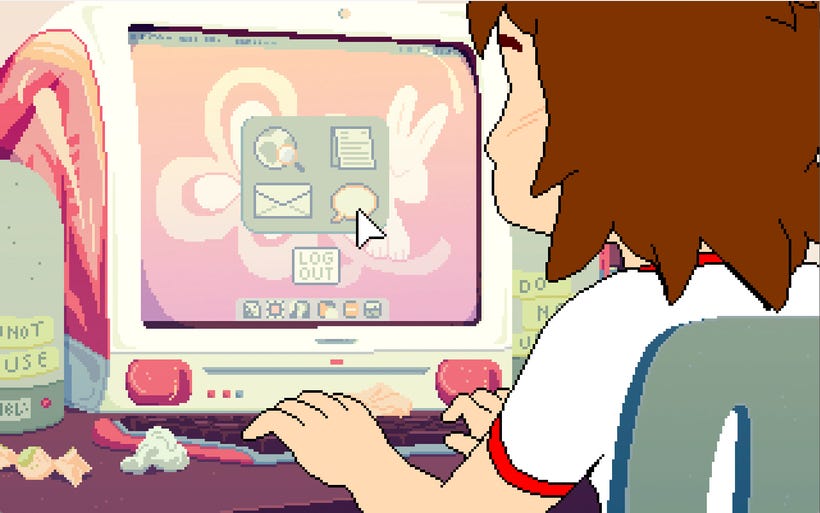
Perfect Tides: Station to Station is part of a growing trend that began over a decade ago

Over the past 15 years, a new subgenre has been gestating: autobiographical video games.
Autobiographical flourishes are as old as video games themselves, but as a holistic style, autobiography took root in the early 2010s. Some early entries blurred the line between fantastical fiction and something more personal. Take, for example, Papo & Yo, an adventure game released on PlayStation 3 in 2012, in which a monster’s addiction to poisonous frogs represents a father and his alcoholism.
At this time, it felt as if the smaller a game’s budget, the more willing its creators were to put themselves into their work. Tiny teams, and often solo creators, chronicled their experiences with online dating, gender dysphoria, and the loss of a child to cancer.
Despite this burst of experimentation, by the late 2010s, following rampant harassment of game developers on social media in the wake of GamerGate, autobiographical projects shrank. The most interesting work happened in text-forward micro games built in tools like Twine. And for a moment, it seems the style might have been a temporary trend, rather than a lasting pillar of popular gaming storytelling.
However! In the 2020s, following the COVID-19 pandemic, and presumably many artists spending a profound amount of time with themselves, the autobiographical games have returned.
This category has never received a proper name. In reviews, interviews, and developer notes, people have used terms like the journal game, the personal game, and the non-fiction game.
I call them memoir games. Memoir feels more intimate, human, and a little voyeuristic — something that can’t be removed from these games’ appeal
A memoir game may be a memoir in the truest sense, a non-fiction story through which the author recalls experiences as they happened. Like 2025’s Despelote. However, I see the term memoir game as more expansive, allowing for fantastical fictional stories too, like the aforementioned Papo & Yo. The memoir game also contains games written in the style of autofiction, stories in which the author might modify certain details of their life experience, or even imagine entire characters or moments, in pursuit of a greater truth. Like the Perfect Tides series.

My latest guest is Meredith Gran, the creator of Perfect Tides: Station to Station. Station to Station is the second entry in the series. That said, you don’t have to have played the original, about an emo, terminally online teenager’s life on Fire Island, NY, in the year 2000, to enjoy Station to Station, which is about an indie rock aspiring writer attending college in Manhattan in 2003.
That timeline’s specificity isn’t an accident. Though the game follows the fictional character Mara, it borrows liberally from its creator’s life.
I’ll let my feelings be clear up top. Station to Station is one of the best games of the 2020s. And that I was an indie rock-loving aspiring writer attending college in Manhattan in 2004, a year after this game is set… well, I confess that might influence my opinion.
In the episode, I chat with Meredtih Gran about creating a game based on her life. How one person’s ultra-specific experiences can help someone recall their own. What it’s like to revisit your college self. Why’s it important to talk about bad sex. And how do you turn your worst breakup into a boss fight?
The episode will be available for free on Monday, along with full episode notes, here at post.games.
And as always, if you’d like to hear the episode early, ad-free, and with a bonus section on the history of memoir games, you can find that now at patreon.com/postgames.

I'm trying something new. I realized my episode intros are basically blog posts. So, I'm considering publishing them on Fridays, both to let newsletter subscribers hear about the upcoming episode and have something I (and maybe you, if you like it!) can share with people on social media. Let me know what you think!
Interesting framework for understanding these games. The term "memoir game" captures something important about the voyeuristic intimacy you mention - there's a particular vulnerability when developers translate personal experience into interactive form. The distinction between different approaches (strict non-fiction vs. autofiction) is useful, though I wonder if the interactivity itself changes how we process these stories compared to traditional memoirs. When players make choices in someone else's fictionalized life, does that create a different kind of empathy or understanding than reading a written memoir?